
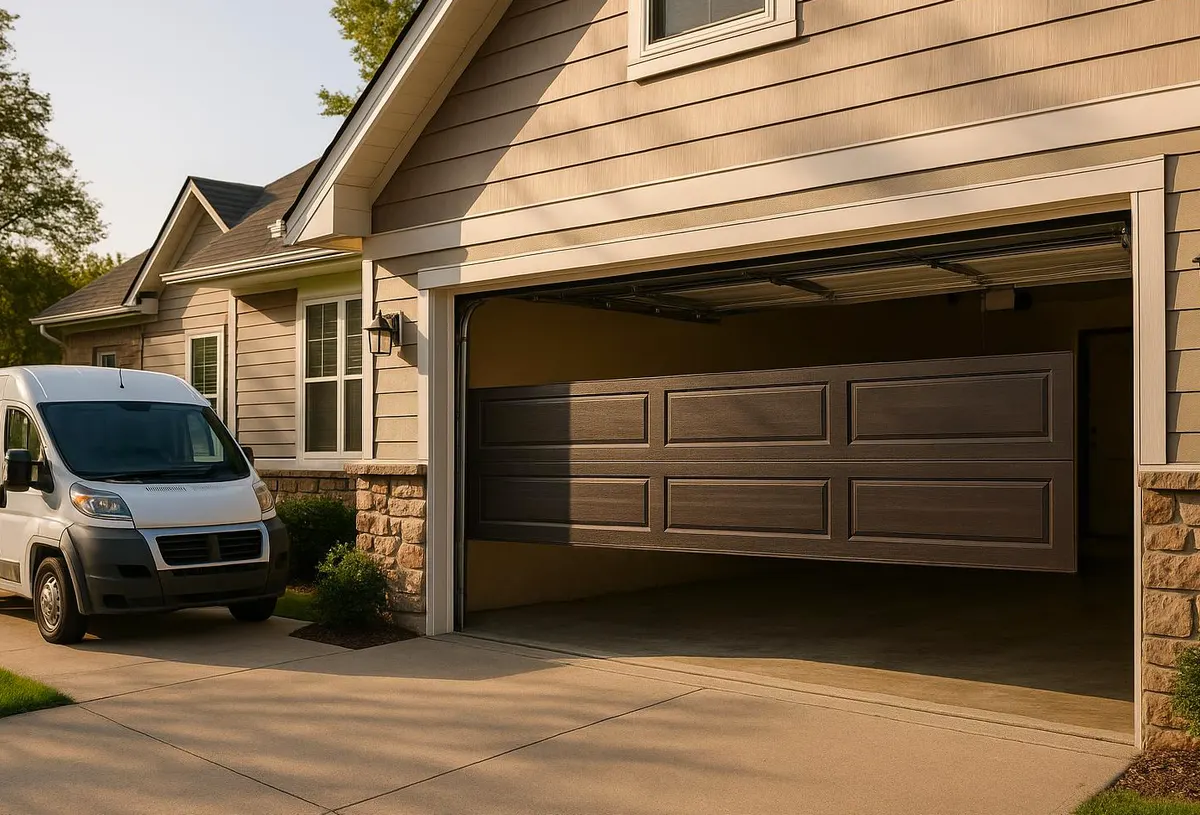
What a Technician Sees on a Typical Call
Most calls about new doors start the same way. A homeowner has a door that's rusted at the bottom panel from years of humidity, or warped enough that it no longer seals against afternoon downpours, and they want a straight answer on what a replacement costs. The honest answer is: it depends, and anyone who quotes a single flat number without seeing the door, the opening, and the garage itself is guessing. What follows are national price ranges, labeled as ranges, along with the specific things that push a job toward the low end or the high end.
The Short Answer: National Price Ranges
These are installed costs — door plus labor — and they shift based on size, material, and the factors covered below.
- Basic steel, non-insulated, single door: roughly $700–$1,200
- Insulated steel, single door: roughly $1,200–$2,000
- Carriage-style steel (faux wood look): roughly $1,800–$3,000
- Real wood or wood composite carriage door: roughly $3,000–$5,000+
- Custom insulated carriage style with glass or decorative hardware: roughly $4,000–$7,000+
Double-wide doors generally run higher than these single-door ranges, since they require more material and heavier-duty hardware to handle the extra span.
What Actually Moves the Price
Within any given door style, several variables decide where a quote lands.
Material
Steel is the most common choice because it balances cost, durability, and low upkeep. Wood and wood composite cost more upfront but offer a different look. Aluminum and glass panels show up in modern designs and carry their own price premium.
Insulation
An insulated door costs more than a single-layer steel door, but in a climate with hot, humid summers, insulation does real work. It keeps the garage cooler, which matters if the space is used as a workshop or if an attached room shares a wall with the garage. Insulation also reduces the condensation that forms on uninsulated steel panels when humid air meets a cooler surface — that condensation is what eventually leads to rust along the bottom seal.
Wind Load Rating
Hurricane-season storms bring real wind-load demands, and a door built to withstand those loads costs more than a standard door. The upgrade typically involves reinforced panels, heavier tracks, and stronger end hardware. It's not an optional upsell in areas that see regular storm wind — it's the difference between a door that holds and one that buckles inward under pressure, which can also compromise the roof structure above it.
Size and Height
A standard single door costs less than a double-wide, and a taller opening built for a truck or RV costs more than a standard 7-foot height. Custom sizing always adds to both material and labor.
Hardware, Windows, and Trim
Decorative hinges, handles, and window inserts add character to a carriage-style door, but each of those details adds cost. Glass panels in particular raise the price of both the door and, often, the insulation rating, since glass is harder to insulate than solid steel or wood.
Removal and Structural Repairs
Taking down and disposing of the old door is usually included in an installation quote, but if the opening has rotted framing, a rusted track, or a bent header from a prior storm impact, that repair work gets added on top of the door price. This is common on older homes where moisture has worked at the wood trim around the opening for years.
Steel, Wood, and Composite in This Climate
Steel remains the practical default for humid, storm-prone weather. A galvanized or well-coated steel door resists the rust that comes from repeated exposure to moisture and swelling far better than raw wood. Real wood carriage doors look striking, but wood expands and contracts with humidity swings, and without regular sealing it can swell, stick, or start to rot at the bottom edge after a few wet seasons. Wood composite splits the difference — it mimics the wood look but resists moisture swelling much better, at a cost premium over plain steel but often less than solid wood over the long run once you factor in resealing and repainting.
A Quick Way to Think About the Decision
- Decide if insulation matters for your use of the garage — workshop, extra storage, or a room that shares a wall with it.
- Confirm whether a wind-load rated door is the right call given storm exposure on the property.
- Pick a material based on how much upkeep you're willing to do — steel for low maintenance, wood or composite for a specific look.
- Get the opening and framing checked before assuming the number on a basic quote is the final number.
When to Call Grant Garage Door
If a current door is rusted, swollen, no longer sealing well against wind-driven rain, or just old enough that repairs keep piling up, it's worth having it looked at before deciding between a repair and a full replacement. Grant Garage Door handles Garage Door Installation from basic steel through custom carriage style, and will walk the opening, check the framing, and talk through wind-load needs before giving a written quote — not a guess over the phone. For doors that are structurally sound but showing early wear, Garage Door Maintenance can sometimes extend the life of the door a few more years before replacement becomes the better investment.
If you're weighing a new garage door anywhere in Grant, AL or around Marshall County, call Grant Garage Door for an honest, on-site assessment and a real quote based on your door, your opening, and your home.